An excerpt from the motion picture Funky Forest combined with the music of Freescha.
Via: Reactual
Also:

Indiana Jones in Pixels.
One row per film. Good guys on the left. Baddies on the right. Key artifact in the middle.
From the album Tape It Back Together on Peanuts and Corn Records.
Also: Monkey Temple
What if we could touch our music again?
Also: SoundCards, music trading-cards that link you to music in the cloud.
- Many people have a physical connection with their music. These people like to organize, display and interact with their music via the containers (album covers, cd cases).
- Music is a highly social medium. People enjoy sharing music with others. People learn about new music from others in their social circle.
- The location where music is stored will likely switch from devices managed by the listener to devices managed by a music service. In the future, a music purchaser will purchase the right to listen to a particular song, while the actual music data will remain managed by the music service.
Finally: Daito Manabe and Motoi Ishibash built a lighting sequencer that uses RFID-enabled cards to control lighting and sounds.

Somewhere in Griffin, Georgia.
Winnipeg city planners take notice. We need signs like this.
There’s a similar sign in Sealy, Texas.

70% of Winnipeggers are using Facebook. 1% of Winnipeggers are using Twitter. [source]

Mr. Dressup.
A work in progress.
”Maybe it’s time we get out of the broadcasting business…”
—Dean Del Mastro, Parliamentary Secretary to the Minister of Canadian Heritage.
Them there are fight’n words. Sign the petition, or better yet, send a hand-written letter of support for the CBC to our Heritage Minister:
The Honourable James Moore
Minister of Canadian Heritage
and Official Languages
House of Commons
Ottawa, Ontario
K1A 0A6

Countless fragments of existing architectural photography are merged into multilayered shapes. The original pictures are analysed and categorised according to their vanishing-points and shapes. The resulting collages introduce a third abstract point of view next to the original ones of architect and photographer.

@redlibrarian: “From the Wiki page on Jan Tschichold, a book designer who looked specifically at page ratios.”

‘One Hundred and Eight’ is an interactive, wall-mounted installation by Berlin-based media artist Nils Völker.
Via dad via the pop-up city.
Flying a RightWing Zephyr in New York, over the Brooklyn and Verazano Bridge, around Downtown Manhattan and the Statue of Liberty.
Also: Build Your Own.
Hans Rosling’s 200 Countries, 200 Years, 4 Minutes - The Joy of Stats. [via]
A beautifully layered philosophical interpretation of Inception by Quinn A.C. Nicholson at Metaphilm.
“Christopher Nolan is, at best, a genius who is taking us through the history or man’s understanding of reality; at worst, a very clever crow good at finding shiny items of interest from the various human sciences and building a nest out of them.”
In November 2003 I recorded myself playing John Lennon’s Imagine and mcenroe’s Billy’s Vision… at the same time!
I’ve started a computer programming blog called CodeGlutton.

There is a printmaking and jewellery open studio this weekend at the Artspace building, (Winnipeg).
We are please to present a variety of custom jewellery, limited edition prints, water colours and photographs.
Open Studios:
- North Nassau Printmakers and Bryan Johnson Creations
5th floor, room 523 - Mary Krieger’s Print Studio
6th floor, room 607
We are located in the Artspace building (100 Arthur St @ Bannatyne).
The studios will be open from noon until 6pm on Saturday and Sunday (November 27th and 28th).
A Worldwide Hackathon on December 4th, 2010 to encourage the adoption of open data policies by the world’s local, regional and national governments.
Mapping municipal water fountains using Google Maps.
“The Blue W is a not-for-profit organization driven by a genuine appreciation for the hard work of municipal water providers. We supply detailed information on where to find healthy, safe municipal tap water anywhere around the globe.”

Sand dunes inside the Proctor crater on Mars. [via apod]
Improve your understanding of grammar and punctuation. Skip directly to the exercises if you think you’re a pro.

Girl Talk makes illegal art.
All Day is intended to be listened to as a whole.
This album is a free download. [torrent]
Girl Talk thanks all artists sampled.
Perils of Internet Voting
The following is an expanded version of my letter to the editor featured in the November 12th edition of the Winnipeg Free Press.
In their editorial Modern times, ancient system, the Winnipeg Free Press recommends internet voting as a means of increasing voter turnout. Senior city hall elections official Marc Lemoine has also expressed an interest in online voting. As a computer engineer who teaches web programming courses I would urge them to reconsider.
Internet voting would be much less secure than our current system and would mean the loss of a physical record of votes for auditing purposes. We would also lose the ability to verify that each vote was cast by a unique voter. For example, a parent might be tempted to ask their 18-year-old children if they could vote on their behalf, or vice versa.
Recently, election officials in Washington D.C. invited security experts to test an internet voting system designed for overseas voters. Within 36 hours a team of computer scientists from the University of Michigan had compromised the system, allowing them to read and change recorded votes. One member of the team, J. Alex Halderman, had this to say:
“Major web sites like Facebook and Twitter regularly suffer from vulnerabilities. These high-profile sites have greater resources and far more security experience than the municipalities that run elections. It may someday be possible to build a secure method for voting over the Internet, but in the meantime, such systems should be presumed to be vulnerable based on the limitations of today’s security technology.”
Implementing internet voting in Winnipeg would require a change in provincial legislation.
More Information:
- Hacking the D.C. Internet Voting Pilot - J. Alex Halderman
- A Comparative Assessment of Electronic Voting [pdf] prepared for Elections Canada by the CETD.
- Casting a Vote Against Internet Voting - Michael Geist
Electronic voting machines are equally troubling:
Brian Kelcey on Open Data in Vancouver, Winnipeg and across the pond.
“During Winnipeg’s recent Mayoral election, incumbent Mayor Sam Katz fended off even the most basic calls for more open government with absurd claims, arguing that no government anywhere would release contracts or other commercial records. My reply wasn’t to point to a civic example - although there are plently to choose from. Instead, I pointed to the UK, where, the Coalition Government’s transparency agenda is easily the most sweeping Open Data transformation on earth right now.”
Related:
- MyPeg - Measuring the well-being of our community. (Built on OpenStructs. RDF data provided as XML and JSON.)
- Google Refine 2.0 - The first Google/Metaweb tool. I wonder what they have planned for Freebase?


“Sometimes reality is too complex for oral communication. But legend embodies it in a form which enables it to spread all over the world.”
from: If We Don’t, Remember Me.
Replicants scare me. How long before robots like this Actroid F learn to pass the Voight-Kampff empathy test?
And if you thought that was freaky, meet Telenoid R1.
You’ll find me amongst the responses.
Paper Mario is for reals!

A WinnipegElection.ca election brief in today’s Free Press.
Candidate questionnaires online
Two Red River College instructors compiled more than 1,000 articles about the election on a non-profit website called winnipegelection.ca. Information-technology instructors Kyle Geske and Jody Gillis created the site in July to provide voters with more information about mayoral, council and school-trustee candidates. As of Friday, their repository included 1,082 election articles, compiled from a variety of Winnipeg media websites, as well as 83 questionnaires completed by candidates.
October 23rd, 2010 - @bkives
The historical origins of some Winnipeg street names.
“Minecraft is just Farmville for dorks.”
One hour documentary on data visualization as a storytelling medium.
A primer on electronics from conduction through to digital logic gates.
There’s a crowd-funded party tomorrow night in Williamsburg, Brooklyn to celebrate the 15th anniversary of the movie Hackers.
“Have you ever dreamed of hacking the Gibson? Wearing rollerblades to a party? Playing a beta of Wipeout on a massive projection screen? Listening to Orbital’s Halcyon & On & On while spinning in a telephone booth wearing a virtual reality visor in Grand Central?
Now is your chance to embrace the ridiculousness and imagination of Hackers the movie — a film that inspired a generation of internet enthusiasts”
Malcolm Gladwell — The Revolution Will Not Be Tweeted.
“[Digital activism] shifts our energies from organizations that promote strategic and disciplined activity and toward those which promote resilience and adaptability. It makes it easier for activists to express themselves, and harder for that expression to have any impact. The instruments of social media are well suited to making the existing social order more efficient. They are not a natural enemy of the status quo.”

I cut my dog’s hair.
Stretching Your Wrists
These Aikido wrist stretches are for anyone who types a lot.
Paraphrasing from Common Programmer Health Problems:
Perform these stretches prior to every typing session:
- To warm up, put your hands out in front of you and grab at the air as fast as you can 20 times. Then shake your hands, then rotate your wrists 10 times one direction and 10 times another.
- Start with the video exercise you’re best at and do 5-10 of them at a medium speed.
- Continue through each exercise. After each one shake your hands and arms and rotate your wrists to realign them. These exercises move the bones in your wrist, shaking them settles them back in to place.
Do just enough stretching to get your wrists feeling supple and relaxed. Don’t strain yourself, the motto “no pain no gain” will only damage you. Instead of forcing your joint to a certain position, bring it to that position and then think about relaxing it or “letting” it move a bit further.
I also like the ergocise wrist stretches.

A post on turning pirates into customers by the creator of Minecraft.
“Large parts of the culture these days exists in a world where copies are free. Copying a physical book costs money, but copying a digital movie is free. […] No resources are lost, nobody loses any money, and more people are having fun. […]
All of society and economics is based on an old outdated model where giving something to someone would rid the original owner of their copy. […] For example, for every wheel in the market, someone had to make that wheel. With digital copies, you only need to make the wheel once. […]
If someone pirates Minecraft instead of buying it, it means I’ve lost some ‘potential’ revenue. Not actual revenue, as I can never go into debt by people pirating the game too much.”
Radio Hi-Jack Vol. 1 - Tim Martell & DJ Noumenon (No longer available.)
Bump it, yo! Old Skool elements to make you bounce.
Cache Rules Everything Around Me
The Internet is a novelty aggregator. Nearly ten minutes of animated GIFs set to Girl Talk’s NightRipper.
[via]
“Enter the address of the home where you grew up.”
A Google Maps enhanced music video by Chris Milk for Arcade Fire, complete with beautiful boid swarming on the landing page.
Hypnagogia: “You know that place between sleep and awake, the place where you can still remember dreaming?”
DIY Magic. via
Also: The Ganzfeld Technique
“A progressive lending library of electronic components. An internet meme in physical form halfway between P2P zip-archive sharing and a flea market.”

Awareness
via bk
John, a previous student of mine, made this weather-aware application and entered it in the Apps 4 Climate Action contest.
Enter your (Canadian) address to see the average rainfall in your area over the last 7 days. John’s site uses data from Environment Canada’s 1079 weather stations. (See the Rain Caddy About page for a map of all these stations.)
Open Data for the win.
Simple, addictive helicopter game written with HTML5 complete with source code.



Request for Feedback: WinnipegElection.ca
Hi folks,
On October 27 of this year the citizens of Winnipeg go to the polls to elect their Mayor, their City Councillors and their School Trustees.
Making an informed vote requires that you know the candidates, their platforms and the issues they discuss.
This is why we’ve created WinnipegElection.ca, a citizen driven website for the upcoming Winnipeg general election.
Our public launch is later this month, but we’d love you to take a sneak peak.
We’ll use your feedback to determine how to proceed with the site.
Currently you’ll find:

Lightning Over Athens. [via]
42 “stacked shots” taken during a lighting storm. I looked up the term “stacked shots”. It’s like it sounds, a process of superimposing multiple images.
“Stacking was developed for astronomy. The purpose then was to reduce digital noise. When using film, astronomers would sometimes expose for hours at a time (occasionally, exposing the same piece of film several nights in a row, making the exposure equivalent to several days).
Trying to do the same with digital would result in 100% noise, 0% image.
By stacking many images of shorter duration, [digital photographers] can get the equivalent of a very long exposure, each of which has the noise of a shorter exposure. The signals combine in a complementary fashion, while the noise combines in ways that mostly cancels itself out. There are more advanced statistical techniques uszed that can reduce random sensor noise to virtually zero.” —AustinMN @ Panoramio

Denis Prieur’s Rural Graffiti near Rock Lake, Manitoba.

Vine Girl from Marc DeGagne’s adventures in Argentina. Also: Chile and Uruguay.
Video from SuperMe a multi-player resilience and happiness game from Channel 4’s education department.
It’s interesting to see these types of “life-hacking” games trend upwards. Related: EpicWin, RibbonHero, Future of Games, Jane McGonigal.
[via]

Super Mario “Speed Run” Augmented Reality.
Respect. [via waxy, again]
Members chime in on what they’ve spent large portions of their life doing wrong.
Glad this didn’t get nixed as ChatFilter. [via]
“If we were trying to build a true, general AI, we would first need to create a way for it to get around and interact with the larger world. And we would need a system for rapid knowledge acquisition, so that we wouldn’t have to manually explain every detail of how the world works.”
Near future AI: Autonomous Automobiles and Learning by Reading.
“This is one of the gifts plants give me. They remind me to slow down, to take the long view, to breathe, relax, and just wait for what happens next.”
From the Stone Soup blog.
More from Stone Soup:


Cross The Road - [via]
Vanishing Point - A generative kinetic music video. [via]

Doodle from class today.
“Emend is a service for alerting website owners and authors of grammatical and spelling mistakes found on their site.”
Amendments for your site show up in an ATOM feed. Example: Stungeye@Emend
[via: The comments for a blog post on XML extensibility.]

pieces of relationship - mixed media on wood, 10 x 12”

The maps of the Geotaggers’ World Atlas have been enhanced to show tourists in red, locals in blue. (Yellow could be either.)
Object-Oriented Modeling, when discussed separate from computer-programming, becomes very philosophical.
Objects as Platonic forms.
Canadian Copyright - Bill C32
On Thursday the Canadian government introduced the Copyright Modernization Act (or Bill C-32).
The CBC does a good job of outlining the proposed changes to Canadian copyright law.
The bill is an attempt to strike a fair balance between:
- Our ability to monetize creativity. -vs- Our ability to re-purpose culture.
- A creator’s right to control their works. -vs- A consumer’s rights to experience purchased media flexibly and in perpetuity.
There are things to like in this bill. The format-shifting, time-shifting and backup provisions are long-overdue, as is the expansion of fair-dealings1. The non-commercial “mash-up/youtube” provisions are indeed progressive.
However, any and all use-rights provided by the bill are revoked if the work in questions is protected by a digital lock. This immediately makes backing up DVDs illegal. It also makes viewing DVDs using the Linux operating-system illegal2. Copying a quote from a DRM-locked e-book for a book report or a news story would be illegal too.
The supremacy of digital-locks promoted by this bill must not be allowed to pass into law. If you value free-speech, your ability to re-purpose culture, and your right to use your purchased media as you see fit, I ask that you write your Member of Parliament to express your displeasure over the DRM provisions in Bill C32. (If anything, a bill that includes DRM provisions should mandate explicit labeling of all digitally-locked media.)
You can find your MP by searching for your postal code on openparliament.ca.
I recommend following these tips on discussing bill C32 with your MP. For the most impact, voice your displeasure using hand-written snail-mail.
Footnotes
Fair dealing for the purpose of research, private study, education, parody or satire would not infringe copyright. Parody and satire were not previously considered fair dealings in Canada.
In order to view legally purchased DVDs using the Linux OS one must break the digital locks on the DVDs. The reason for this is that the DVD industry has not provided any other way to view DVDs when using open-source software. Since I use Linux for all my DVD viewing, C32 would make watching movies a criminal activity for me.
Michael Geist’s initial reaction to the Canadian copyright reform bill (C-32) announced today.
Looks like an improvement over C-61 but DRM is still poised to trump fair dealing.
“The future belongs to the companies and people that turn data into products.”
The Secret Powers of Time by Philip Zimbardo.
It’s worth your time to watch this video. :)
Related: The Riddle of Experience vs. Memory a TED talk by Daniel Kahneman
P.S. Zimbardo was the led researcher behind the famous Standford Prison Experiment.
Lessons from fashion’s free culture a TED talk by Johanna Blakely of Ready to Share.
These are interesting ideas to ponder considering that our Canadian government is about to propose a major (and perhaps heavy-handed) restructuring of our copyright laws.
Related: Terms & Conditions - A short video on Digital Rights Management.

A dark solar filament seen across the surface of the sun.
Related: Video of Large Eruptive Solar Prominence.
Web 3.0 - A short documentary on the semantic web.
The 50 greatest Hip-Hop samples according to Kon & Amir. [via]
Glutton LastFM
Two days ago I released my first Ruby gem. In coding parlance gems are software libraries created to enhance the Ruby programming language.
My gem is call glutton_lastfm. It’s a wrapper library for version 2.0 of the last.fm API. The source code and documentation is available on my github account.
This gem allows you to query last.fm for:
- artist information by name
- top albums by artist
- top tracks by artist
- top user-submitted tags by artist
- upcoming events by artist
- album information by name
For example, here’s a program that searches for tags and images related to Buck 65: artist_tags_and_images.rb
I wrote this library to:
- Learn the gem creation process. (Facilitated by the jeweler gem.)
- Better understand the mechanics of web-based APIs. (Facilitated by the httparty gem.)
- Brush up on my unit-testing skills. (Facilitated by the fakeweb gem.)
- Distance myself from years of return-code function creation in favour of exceptions.
I also wrote it as part of a larger data-mining project I’m working on. (Which reminds me that I’ve been meaning to write a post on datasets and the soon to explode dataset market.)
The glutton_lastfm source-code is released unlicensed into the public domain.

Jody and I went hiking on the Mantario trail last weekend.
Nomic is a game in which changing the rules is a move. The Initial Set of rules does little more than regulate the rule-changing process.
Anthropologist David Graeber explores the 5000 year history of dept on the Long Now blog.
Hitler can’t get a Folk Fest campground pass.
Update: (2010-05-01) The above video was part of a video remixing meme based on the movie Der Untergang. Was it taken down by the film’s production company? Was it a fair use parody?
Old-school optimalism, which aims at pushing technological boundaries in order to fit in “as much beauty as possible”, versus new-school reductivism, which idealizes the low complexity itself as a source of beauty.
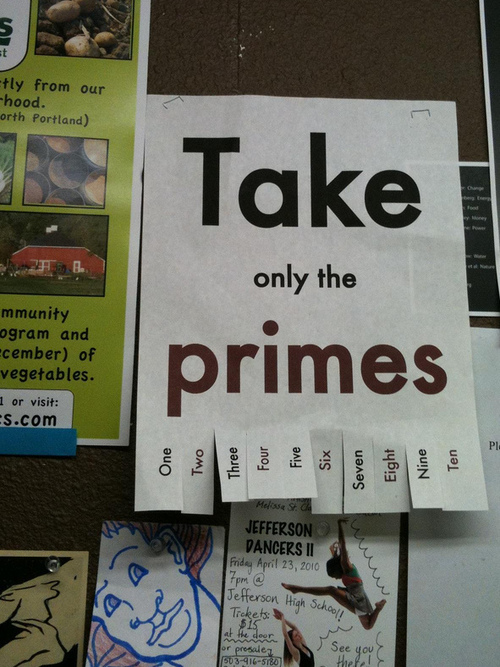
Tweets may soon include optional payloads of structured data. The purpose and usage of these annotations?
“Annotations are a blank slate that lend themselves to myriad divergent use cases. We want to provide open-ended utility for all the developers to innovate on top of.”
— Marcel Molina - Early look at Annotations
Possible Useful Annotations:
- The full URL of all shortened URLs that appear within a tweet.
- Longitude/latitude geo-locations when tweeting from GPS-enabled devices.
- Re-tweet history and/or attribution information.
- Multimedia URLs. Link a tweet to images, videos, and sound files.
- Multimedia data. The system should eventually support 2K payloads containing small images, sound clips, MIDI, etc.
- Microformats

Algorithmically generated Russian Dolls. (Open with a browser that supports html5 canvas, in other words, not Internet Explorer.)
See what your representatives are saying, and what laws they’re proposing.
Also, they provide a Hansards of the House API while in turn they make use of the How’d They Vote Postal Code API.
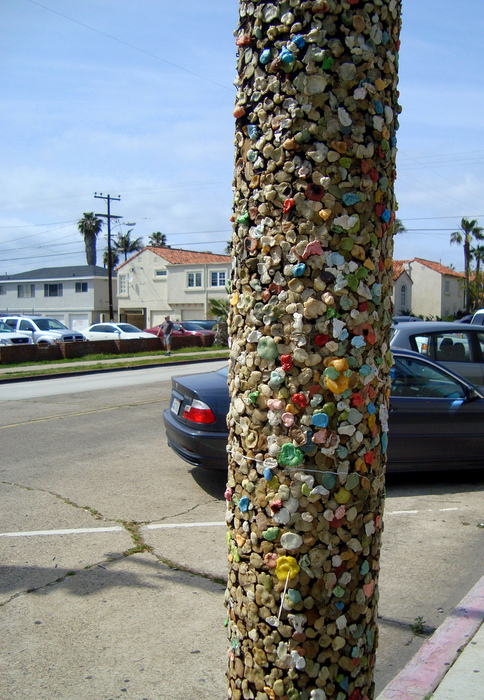
This is a pole covered in bubble gum. We visited friends in San Diego over the weekend. This is one of many photos of our trip.
Nature by Numbers - A short movie inspired by numbers, geometry and nature.
I recommend watching in high-def and full-screen via the above link.
See the theory page for more information on the math that inspired this video.
A search for meaning within a game within a game. This 20 minute film by David Kaplan and Eric Zimmerman gets meta faster than you can say eXistenZ. ;)
The principles of Christopher Alexander’s classic book on the use of patterns in architecture applied to the architecture of online social spaces.
Mr. Alexander’s ideas are also influential in the world of object-oriented programming.
Industrial Precision - How Ball Bearings Are Made
If an activity can be learned;
if the player’s performance can be measured;
if the player can be rewarded or punished in a timely fashion;
then that activity can be turned into a game.
via: Lost Garden ✈ Ribbon Hero turns learning Office into a game

Pomplamoose VideoSongs have two rules:
- What you see is what you hear, and
- If you hear it, at some point you see it (no hidden sounds).
Some nice songs:
- Hail Mary
- Single Ladies (Put A Ring On It) - Beyonce
- My Favorite Things - Sound of Music
- If You Think You Need Some Lovin
[via]
Mobile Development
This weekend I’ll be exploring:
- PhoneGap - Cross-platform mobile app-dev using html / css / javascript.
- JQTouch - A mobile plugin for my fav Javascript framework, JQuery.
- iProcessing - The API from processing.js extended for mobile use.
- MobiOne - Windows mobile emulator for iPhone, Blackberry, Android and Pre.
Step one: Install Eclipse, PhoneGap and the Android SDK along with JQTouch, iProcessing and MobiOne.
Step two: Play around. Create a few sample apps.
Step Three: Tomorrow Andrew and I will deploy these apps to his Android phone.
You Know Who "Gets it"?
The Hypemachine, Groveshark and SoundCloud understand that the future will be streamed.
You can listen to (in their entirety) every album of the Hypem top 50 of 2009. The top 50 was crowd-sourced from the top 10 lists of over 500 bloggers. The albums are hosted by Groveshark.
Yes, the Hypem leaderboard gets gamed now and then, and it sometimes get clogged with meme-ooze, but the web’s messy like that.
SoundCloud is a mix-hunters paradise. I’m listening to Dj Czech’s “Bucket Of Grease” mix right now.
The goal of this challenge was to write a computer-program capable of playing the game Tron.
The rankings for my Ruby bot:
- 146 / 708 Total Entries
- 3 / 23 Ruby Entries
- 16 / 88 Canadian Entries
The rankings were determined using tournament play along with the Elo rating system.
Early non-minmax versions of my bots are available on github. The winning C++ bot source is also available; as is a brief explanation by the author.
I enjoyed this challenge immensely. My Ruby programming skills also benefited from this Code Kata.
Update: A detailed examination of the winning bot. And if you’re brave, a Haskell bot explained. ;)
Also: The tron battle continues on dhartmei’s server.
The future of games, a talk by Jesse Schell. [28 minutes]
Even if you’re not a gamer this is a must-watch video, especially the second half on the implications of “games that break through the reality barrier” and the attention economy. I’m not sure I welcome the “gameification” of life, but it does feel like the inevitable progression of the capitalist spectacle. “A world where points are distributed for paying attention — to ads, activities, or other people.”
Adding to the conversation:
- Awesome By Proxy: Addicted to Fake Achievement
- Achievement Porn
One human, three machines, rhythm. Also: How it works.
Amsterdam is now home to the world’s first open source restaurant. Everything you see, use and eat is downloaded from Instructables.com.
It’s an experiment in combining free culture with food concepts.

From May 2010 DC Covers in Three Sentences or Less.
Also: Batgirl

Forget crop circles, Sierpinski snow-triangles are the new hotness.

iProcessing is an open programming framework for native iPhone applications using the Processing language. It is an integration of the Processing.js library and a Javascript application framework for the iPhone.
This video shows two AI players battling it out for Tron supremacy as part of the Google AI Challenge.
If you’ve ever wanted to learn about game-AI programming you might want to look into this challenge. Bots can be written in C++, Java, Perl, Python, Ruby, Haskell, C#, Javascript, Go, Scheme, Lua and Clojure.
If you don’t know where to begin, you can try your hand at learning game-AI by playing Ruby Warrior, a roguelike that you play by implementing a Ruby class containing your player’s control logic.
The first of a series of columns by Steven Strogatz on mathematics “from pre-school to grad school”.
“The goal is to give you a better feeling for what math is all about and why it’s so enthralling to those who get it.”
[via: dad]

Media: Photoshop / Custom Processing sketch.
I cannot remember the source of the ladybug. It was part of a free sprite library created by an indie-game developer.
The Evolution of Remix Culture - How Remix is becoming a platform for collective expression by, and conversations between, social groups.
Although I essentially agree with the ideas presented in this video, there is something about expressing ourselves in terms of pop culture that brings to mind Baudrillard’s Simulacrum. But really, I should learn to stop worrying and the love spectacle. :P
Oh, and bonus points for the Glass Bead Game analogy.
Pete Drake - Forever
Analogue AutoTune using a steel guitar.

Quick! My first animated gif remix. :P
Learn to use the Scientific Method to deduce specific program behavior and to target, analyze, extract and modify specific operations of a program (mainly for purposes of interoperability).
File under: Information that could one day be illegal to posses (given the current direction of copyright reform).
Why we should champion privacy even when we have nothing to hide.
Here are the slides from my presentation today at the RRC Directions business conference.
Click the “full” button to view in full-screen mode.
A container game within an essay on metagames and containers.
“All the ways in which we build around and on top of our creations greatly impact the way they’re used.
Boundaries may not be physical anymore, but they remain powerful.”
I’ll be giving a talk tomorrow at the RRC Business and Applied Arts Conference entitled “Launching Your First Web Start-up”.
I’ll post the slides for the talk here tomorrow afternoon.
An API for LCBO store, product, and inventory information. Created by Carsten Nielsen but not affiliated with the Liquor Control Board of Ontario.
John Nunemaker on Talent vs Practice via Giles Bowkett
“We are born into a world that presents us with many millenia of collected knowledge and information, and all our predecessors ask of us is that we not waste our brief life ignoring the past only to rediscover or reinvent its lessons badly.” —Erik Naggum
Capitalism as communal risk management.
(Articles like this are best read using the Readability bookmarklet.)
“It is not that we have so little time but that we lose so much. [W]hen it is squandered through luxury and indifference, and spent for no good end, we realize it has gone, under the pressure of the ultimate necessity, before we were aware it was going.
So it is: the life we receive is not short but we make it so; we are not ill provided but use what we have wastefully.” — Seneca the Younger



Release your source-code free and unencumbered into the public domain.
“The author or authors of this software dedicate any and all copyright interest in the software to the public domain. We make this dedication for the benefit of the public at large and to the detriment of our heirs and successors. We intend this dedication to be an overt act of relinquishment in perpetuity of all present and future rights to this software under copyright law.”
It’s time for me to move away from CC Licenses and Unlicense all my publicly released code. I’ve been using the Attribution-Noncommercial-Share Alike license but I no longer feel the need to force attribution and place non-commercial-use restrictions on my work.
I should probably do something similar for all my creative output (prose, poetry, photos, art, etc).
Five (naïve) assumptions we make about creative individuals:
- Creative individuals would not produce their works without the possibility of making money from them.
- Creative individuals are endowed with the inalienable right to control who may copy or modify those works, since without that “copyright” they would not be able to make money from their creative output.
- Copyright is a straightforward extension of physical property rights and therefore a creative work is a form of intellectual property.
- To protect the rights of creative individuals, governments may legitimately prevent others from copying or modifying creative works.
- It is only government-enforced copyright that keeps a creative work safe from the ravages of violation and abuse; when it is no longer so protected, it lapses into a fearsome state of desuetude and disregard called the public domain.
Some of my favourites from Ebert’s list:
- Adaptation
- Almost Famous
- Me and You and Everyone We Know
- Minority Report
- Pan’s Labyrinth
- Synecdoche, New York
- Waking Life
I would have added:
- (500) Days of Summer
- Amelie
- American Splendor
- A Scanner Darkly
- Before Sunset
- Big Fish
- Donnie Darko (original cut)
- Eternal Sunshine of the Spotless Mind
- Ghost World
- L’auberge Espagnole (The Spanish Apartment)
- Lost in Translation
- LOTR Trilogy
- Memento
- Primer
- Spirited Away
- Wonder Boys
Surely I’m forgetting some…